Recursos
EK Instruments: Leading Electrical Testing Equipment Manufacturer Since 2012
2026年08月11日
Learn about EK Instruments — a Electrical Testing equipment manufacturer since 2012, specializing in electrical safety testers, hipot testers, insulation resistance testers, transformer turns ratio testers, and battery internal resistance meters for global manufacturers and labs.
If you’ve ever had to validate a production line, troubleshoot “mystery” leakage current, or prove compliance before shipment, you already know the market is crowded with test equipment companies—but only a few consistently combine practical engineering with scalable manufacturing. That’s where About EK Instruments | Electrical Testing Instrument Manufacturer Since 2012 - Foshan Yikai becomes more than a slogan: it’s a timeline of how an instrumentation company grew into a specialized Foshan Yikai instrumentation manufacturer serving global power-test needs.
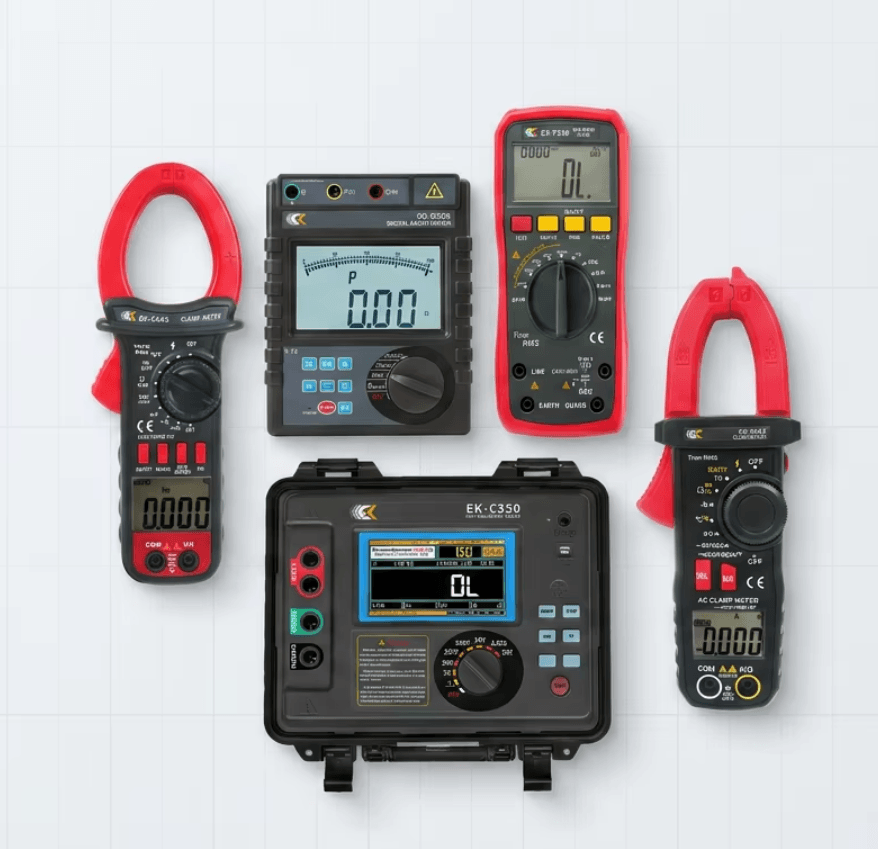
From 2012 to Now: The EK Instruments Story in One Line
Founded in 2012, Foshan Yikai has focused on designing and producing test and measurement equipment for electrical performance and safety verification—building a portfolio that supports factories, labs, and field service teams that need dependable results and repeatable workflows. This practical focus is the foundation of the EK Instruments company profile: a manufacturer that aligns product design with real test scenarios, from line checks to final QA.
As a measuring instruments supplier, EK Instruments emphasizes what most teams care about most:
- Stable measurement performance over time
- Simple, efficient operation for technicians
- Clear pass/fail judgment where compliance matters
- Product lines that scale from entry-level to advanced test stations

What EK Instruments Manufactures: Electrical Testing Instruments That Matter
EK’s specialization is in electronic test and measurement equipment used in power electronics, appliances, motors, transformers, cables, and other electrical products where safety and accuracy are non-negotiable. As one of the focused test equipment manufacturers, EK Instruments targets the tests that show up again and again in audits, production lines, and reliability programs.
Electrical Safety & Withstand Testing
If you’re sourcing an electrical safety tester manufacturer, you’re usually looking for consistent high-voltage performance, clear limits, and trustworthy trip behavior. EK’s lineup is designed for routine safety checks and compliance workflows.
What is a hipot tester used for?
A hipot (high-potential) test applies a high voltage between conductive parts and insulation to verify the insulation barrier can withstand stress without breakdown. In practical terms, it helps detect:
- Poor insulation or damaged dielectric materials
- Creepage/clearance issues
- Assembly defects that create leakage paths
This is why many procurement teams shortlist a hipot tester product range early—because hipot testing is central to safety verification in many product categories.

Insulation Resistance Testing
As an insulation resistance tester supplier, EK Instruments supports the classic insulation test needs for cables, motors, coils, and assemblies. These tests help confirm insulation integrity—especially after humidity exposure, thermal cycling, or handling damage.
Transformer & Power Component Testing
For transformer-related QA, a transformer turns ratio tester supports quick validation of winding ratios and detection of manufacturing deviations. This test is often used to catch:
- Wrong turns counts
- Miswiring or incorrect tapping
- Inconsistent winding processes
Battery & Low-Resistance Diagnostics
In battery packs and energy storage workflows, the battery internal resistance meter is a common tool for screening, matching cells, and monitoring degradation. It can help reduce field failures by identifying cells that show early signs of poor performance.

Why “Manufacturer Since 2012” Is a Practical Advantage (Not Just Branding)
When evaluating instrumentation companies, the year a company started matters less than what they’ve proven over time: process control, product iteration, and support for long-tail usage. A company that’s been shipping since 2012 has typically had time to:
- Improve designs based on customer feedback
- Standardize production testing and QA gates
- Build stable supply chains for critical components
- Expand documentation and test procedures
For buyers seeking a Electrical Testing instruments supplier China, longevity can also mean better continuity—especially for repeat orders, replacement units, and expanding production lines.

Quality Systems: What to Look For in an ISO Certified Test Equipment Factory
Many buyers specifically search for an ISO certified test equipment factory because it’s an indicator (not a guarantee) of repeatable processes. When reviewing a supplier—whether EK or other test equipment manufacturers—ask to see how their quality system shows up in day-to-day operations:
Checklist for supplier evaluation
- Incoming inspection and traceability for key components
- Calibration workflow and traceable references
- Production test records and pass/fail criteria
- Final inspection procedures tied to product specs
- Corrective and preventive actions for recurring issues
These steps are also relevant when you’re dealing with solutions for inaccurate power measurements, because measurement drift and inconsistencies are often rooted in calibration discipline and process control—not just “bad luck.”
How to Choose Power Test Instruments: Practical Buying Guidance
Even experienced engineers can overbuy features or underbuy stability. Here’s a compact framework for how to choose power test instruments when comparing EK with other test equipment companies.
1) Define the application and compliance target
Before you compare brands, define what “pass” means:
- Which standard or internal spec are you testing to?
- What voltage/current ranges are required?
- What limits (leakage, resistance, breakdown threshold) must be enforced?
This supports how to verify electrical safety compliance with an auditable, repeatable test plan rather than ad-hoc testing.
2) Prioritize repeatability and workflow over “max specs”
For production environments, the best instrument is often the one that:
- Produces stable results shift after shift
- Minimizes operator variability
- Speeds up setup, memory recall, and pass/fail decisions
3) Consider service, documentation, and long-term support
Strong documentation, clear front panels/menus, and accessible support reduce training time and prevent misconfiguration—one of the most common real-world causes of “inaccurate measurements.”
4) Match the instrument to the production stage
- Incoming inspection: fast screening tools (IR, basic safety checks)
- In-process test: standardized limits and quick operation
- Final QA: stricter procedures, traceable records, and compliance reporting
EK Instruments vs Other Test Equipment Brands: How to Compare Fairly
Comparisons like EK Instruments vs other test equipment brands should be based on measurable criteria. Instead of judging by reputation alone, compare:
- Measurement stability (repeat tests, different operators, different days)
- Safety test behavior (trip response, limits, clear alarms)
- Usability (setup time, presets, display clarity, error-proofing)
- Manufacturing consistency (units behave the same across batches)
- Support (manual quality, calibration options, after-sales responsiveness)
Best alternatives to Fluke for Electrical Testing (and where EK fits)
Many engineers search for the best alternatives to Fluke for Electrical Testing when they want robust functionality at different price/performance points or when they need purpose-built production testers rather than general handheld instruments. EK Instruments can be evaluated as one of those alternatives depending on your use case—especially if your priority is a focused lineup of electrical safety and power-component testing tools rather than broad multi-category instrumentation.
Preventing Inaccurate Results: Solutions for Inaccurate Power Measurements
Whether you’re using EK equipment or other electronic test and measurement equipment, most measurement issues fall into a few repeatable categories.
Common causes
- Poor test lead/contact integrity
- Incorrect wiring or ground referencing
- Inconsistent clamping/fixtures on the line
- Environmental noise or unstable power supply
- Skipped calibration intervals
Practical fixes
- Standardize fixtures and use consistent contact pressure
- Train operators with a one-page “golden setup” guide
- Run daily/weekly verification checks using known references
- Log anomalies (time, station, operator, product type) to spot patterns
- Maintain calibration and verification schedules
This approach supports faster root-cause analysis and reduces rework—especially when audits require proof that your process can detect defects reliably.
Where EK Instruments Fits in Today’s Instrumentation Landscape
The global market is full of instrumentation companies, but teams often need a supplier that can deliver a consistent product family, predictable QA, and practical operation for technicians. EK Instruments has built its identity around being a specialized measuring instruments supplier for power and safety testing, backed by a manufacturing base in Foshan that aligns with scaled production needs.
In short, About EK Instruments | Electrical Testing Instrument Manufacturer Since 2012 - Foshan Yikai signals a company focused on the recurring “must-have” tests that keep products safe, compliant, and shippable—day after day.
Takeaway: A Clear, Practical Path to Better Electrical Testing
The evolution of EK Instruments since 2012 reflects a straightforward mission: build dependable, production-ready test and measurement equipment that helps manufacturers and labs verify safety and performance with confidence. If you’re assessing suppliers—whether you need a hipot tester product range, an insulation resistance tester supplier, a transformer turns ratio tester, or a battery internal resistance meter—evaluate EK Instruments the same way you’d evaluate any serious partner: repeatability, workflow fit, quality system maturity, and support.